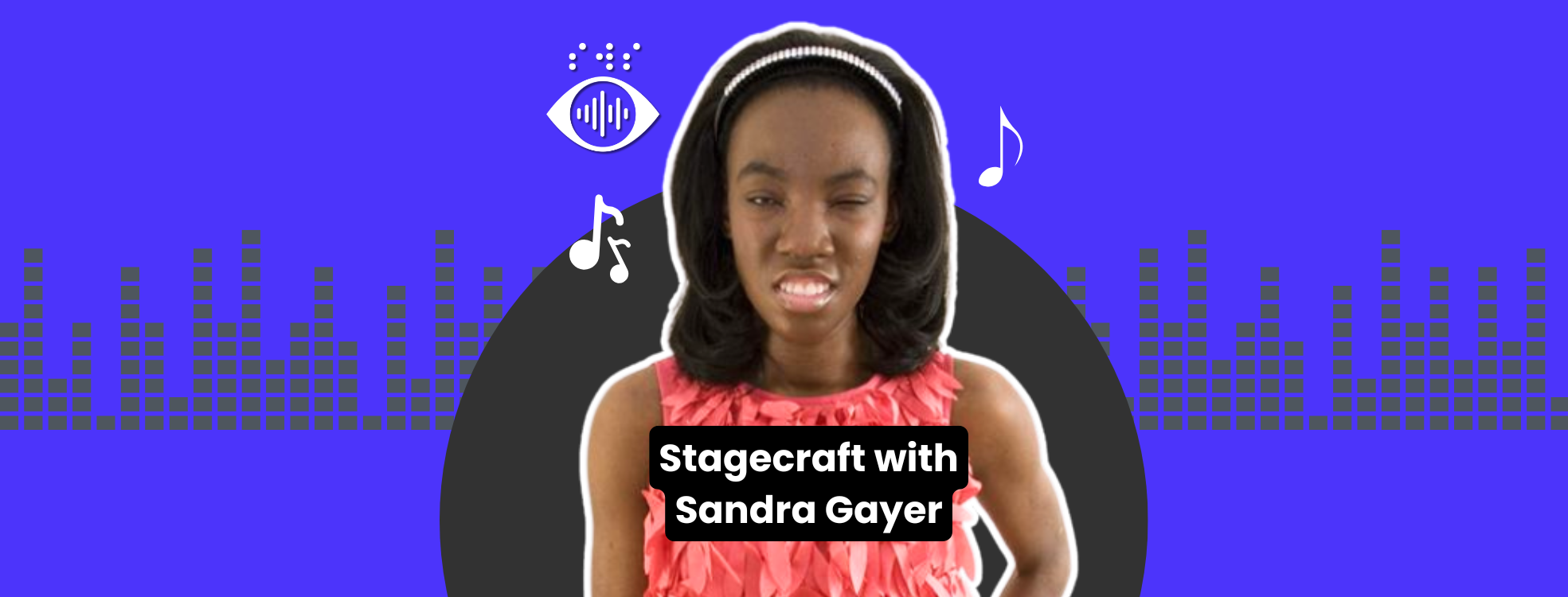
In this episode of the Sound Without Sight podcast, wwe welcome Lachi, a musician, producer, CEO and all-round disability icon.
Lachi shares insights into her career journey so far, her organisation RAMPD, the process of writing her first book, and her approaches to songwriting and music production.
This podcast was recorded live, at a Sound Without Sight webinar in January 2026.
Catch up on the recording
Summary
Introduction
The music industry has long been shaped by creativity, innovation, and cultural expression. Yet accessibility and inclusion have not always been part of that conversation. In this Sound Without Sight webinar, recording artist and disability advocate Lachi shared her experiences navigating the industry as a blind and neurodivergent musician.
Lachi is a recording artist, songwriter, producer, and founder of RAMPD (Recording Artists and Music Professionals with Disabilities). She has collaborated with global artists including Alicia Keys, Snoop Dogg, and Armin van Buuren, while also working to improve representation and accessibility across the music sector.
Her message throughout the webinar was clear: disability should not be hidden or treated as a limitation—it can be a source of identity, creativity, and leadership.
A musical journey built on identity and confidence
Lachi’s connection to music began early in childhood. Growing up with partial blindness, she initially studied classical music and played composers like Chopin and Beethoven by ear. Over time, her influences expanded across genres including R&B, hip-hop, rock, and electronic music.
These diverse influences shaped her unique artistic voice and songwriting style. Many of her early songs focused on themes of belonging, identity, and advocacy—reflecting the challenges she experienced navigating the world as a disabled person.
However, as her career progressed, her creative voice evolved.
Earlier in her career, Lachi felt pressure and insecurity about her blindness and neurodivergence. Over time, building experience and working with major artists helped her gain confidence. That confidence changed the tone of her music—from seeking acceptance to celebrating empowerment.
Today her music often embraces bold themes of resilience and self-worth. Songs such as Life on Hard express pride in overcoming challenges and thriving despite barriers.
Removing the “mask”: authenticity and self-advocacy
A major theme of the discussion was masking—the act of hiding aspects of identity to avoid judgement or discrimination.
For many disabled people, masking can mean avoiding assistive tools or not speaking openly about access needs. Lachi described how earlier in her career she felt embarrassed about using a white cane, worried about being perceived differently in professional spaces.
Eventually she realised that masking was actually limiting her success. When she began openly communicating her access needs—such as requesting accommodations in studios or events—her work improved and her confidence grew.
Self-advocacy became a powerful turning point in her career. Examples of accommodations she now regularly requests include:
- Clear studio spaces without loose cables
- Descriptions of visual elements during music production sessions
- Stage walk-throughs before performances
- Accessible layouts and lighting in venues
- A sighted guide for travel and live events
Many of these adjustments are small but have a significant impact on accessibility and productivity.
Developing RAMPD
Lachi’s advocacy expanded beyond her own career when she helped launch RAMPD (Recording Artists and Music Professionals with Disabilities).
The organisation began after a panel discussion about accessibility in the music industry went viral. Following the event, many disabled creators reached out expressing the same feeling: isolation.
Many artists believed they were the only disabled professional in their field.
Recognising this shared experience, Lachi began connecting musicians, producers, engineers, and other industry professionals with disabilities. What started as informal conversations quickly grew into a global network.
Today, RAMPD works with major organisations including:
- The Recording Academy (Grammys)
- Live Nation
- Spotify
- Netflix
- Tidal
The organisation provides:
- Industry accessibility consulting
- Training for companies
- Networking opportunities
- Mentorship programmes
- Songwriting retreats
- Financial support for professional travel
RAMPD’s core mission is to ensure disabled music professionals can build sustainable careers without needing to hide their identities.
Networking, visibility, and breaking industry barriers
Networking plays a crucial role in the music industry, but it can present challenges for blind professionals—particularly in crowded social events or visually-driven environments.
Lachi emphasised that visibility and confidence can turn these situations into opportunities. One of her most memorable solutions was transforming the traditional white cane into a fashion accessory, leading to her “Glam Canes” brand.
These decorative canes often act as conversation starters at events, encouraging people to approach and start discussions. This simple idea highlights how accessibility tools can also serve as empowerment and identity markers.
Her networking advice focused on three key principles:
- Be authentic – confidence and openness attract connections.
- Build strong relationships – most opportunities come through personal networks rather than cold outreach.
- Develop your craft – excellence remains essential regardless of identity.
As she explained, the combination of strong talent and a unique perspective can become a powerful professional advantage.
Balancing creativity, leadership, and advocacy
Lachi’s career spans multiple roles: musician, activist, entrepreneur, author, and speaker. When asked how she manages so many responsibilities, she explained that she actually sees them as part of the same mission.
Her work—whether through music, fashion, writing, or public speaking—has a single goal:
To entertain and inspire people into caring about accessibility and disability culture.
Rather than approaching advocacy through confrontation, she focuses on humour, creativity, and storytelling to engage audiences. This approach encourages conversations about accessibility in ways that feel inclusive and empowering.
Changing the system through culture
Throughout the webinar, Lachi emphasised the importance of shifting how society views disability.
She contrasted three perspectives:
- Medical model: Disability is a problem to be cured.
- Charity model: Disabled people are objects of pity.
- Social model: Society should remove barriers so everyone can participate.
Her work embraces the social model, promoting accessibility as something that benefits everyone.
Music, she believes, is one of the most powerful tools for cultural change. By increasing visibility of disabled creators in music and media, the industry can reshape public attitudes and open doors for future generations.
Key Takeaways
- Creativity and advocacy can work together to reshape how society understands disability.
- Disability can be a powerful part of artistic identity.
- Self-advocacy and accessibility requests are essential for creative success.
- Strong networks and communities help combat isolation in the industry.
- Inclusion in music requires both cultural change and practical accessibility improvements.
About Lachi
Lachi is an award-winning recording artist, songwriter, record producer, TV personality, and globally touring author. Many know Lachi as the viral Instagram rapper who openly discusses her experience as a blind woman, while others know her for her advocacy partnering with the GRAMMYs, Live Nation and others to bring career opportunities to music creators and professionals with disabilities and neurodivergence through her organization RAMPD.org.
Her pop track “Lift Me Up” in homage to Judy Heumann peaked at #29 on U.S. Adult Contemporary radio, her 2024 award-winning Amazon Music Studios acoustic concert series “Mad Different” found features in Hollywood Reporter and Makers, and her 2025 electronic strut rap “The Bag” found viral LGBTQ+ cult support after being praised by SZA for having great penwork.
Named a USA Today Woman of the Year, an ADCOLOR Innovator and included on both the Billboard Pride and Forbes Accessibility 100 lists, Lachi’s blending of art and activism has landed her spots on national ads and TEDx stages, discussions with the White House, NPR, and the BBC, and features in People, Time Magazine, Good Morning America and the New York Times.
Transcript to follow…